We build the ground you stand on.

Storm drains reimagined. Highway medians reclaimed. Brutalist plazas made living. Civic landscape architecture at the scale of the city.

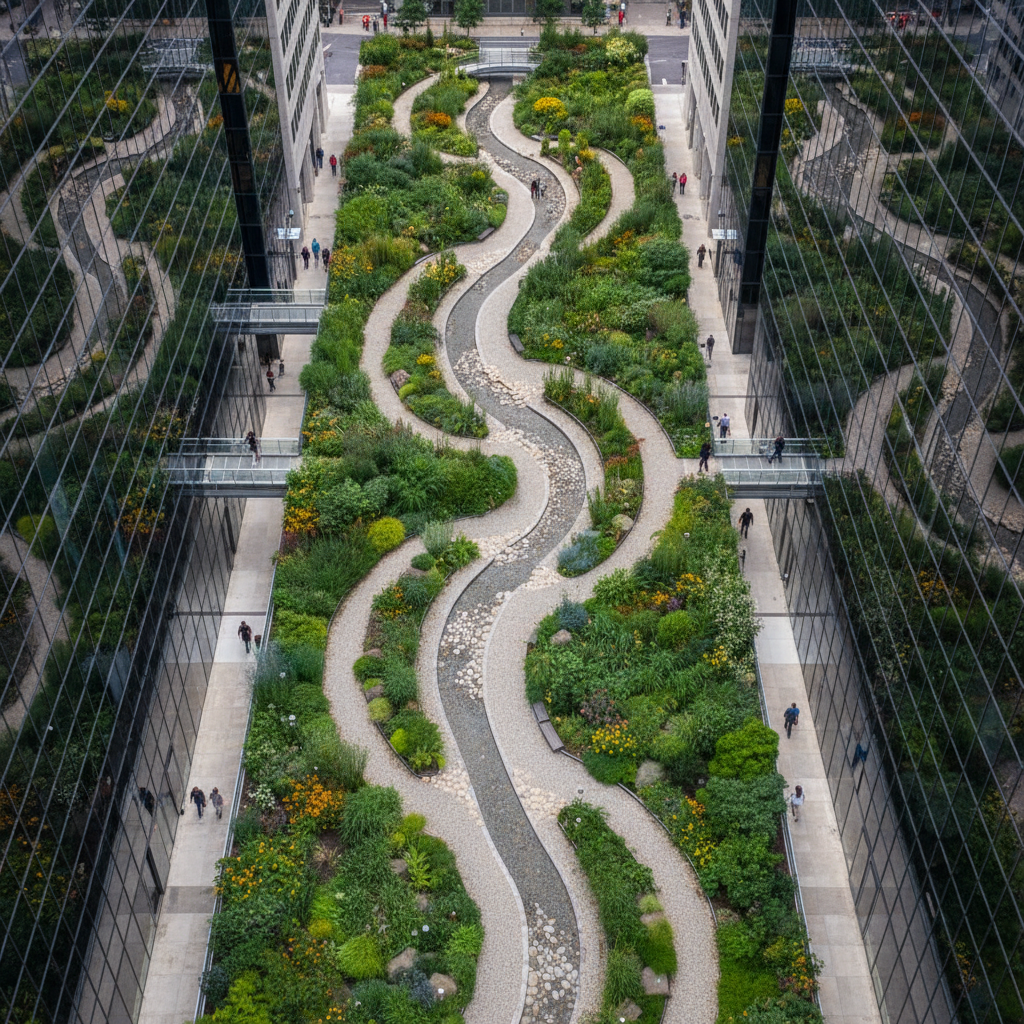
Aerial view of sunken linear garden with native plantings and gravel river pathways through urban corridor

01 / 03

Meridian Storm Garden

ClientCity of Portland, Bureau of Environmental Services
Area14,200 sq ft
Year2023

A decommissioned storm drain corridor converted into a sunken linear garden along SE Hawthorne. Bioswales handle 2.4M gallons of annual stormwater. Gravel rivers replace concrete channels. Cor-ten steel planters hold native sedge and ironweed.

Material Callouts

Cor-ten steel planters — 3/16" plate, raw finish
Decomposed granite paving — 4" compacted base
Bioswale aggregate — 3/4" washed river rock
Native sedge + ironweed — 2,400 plugs

"Terrain delivered a model for civic green infrastructure that we are now replicating in three additional corridors."

Director of Urban Watersheds, City of Portland
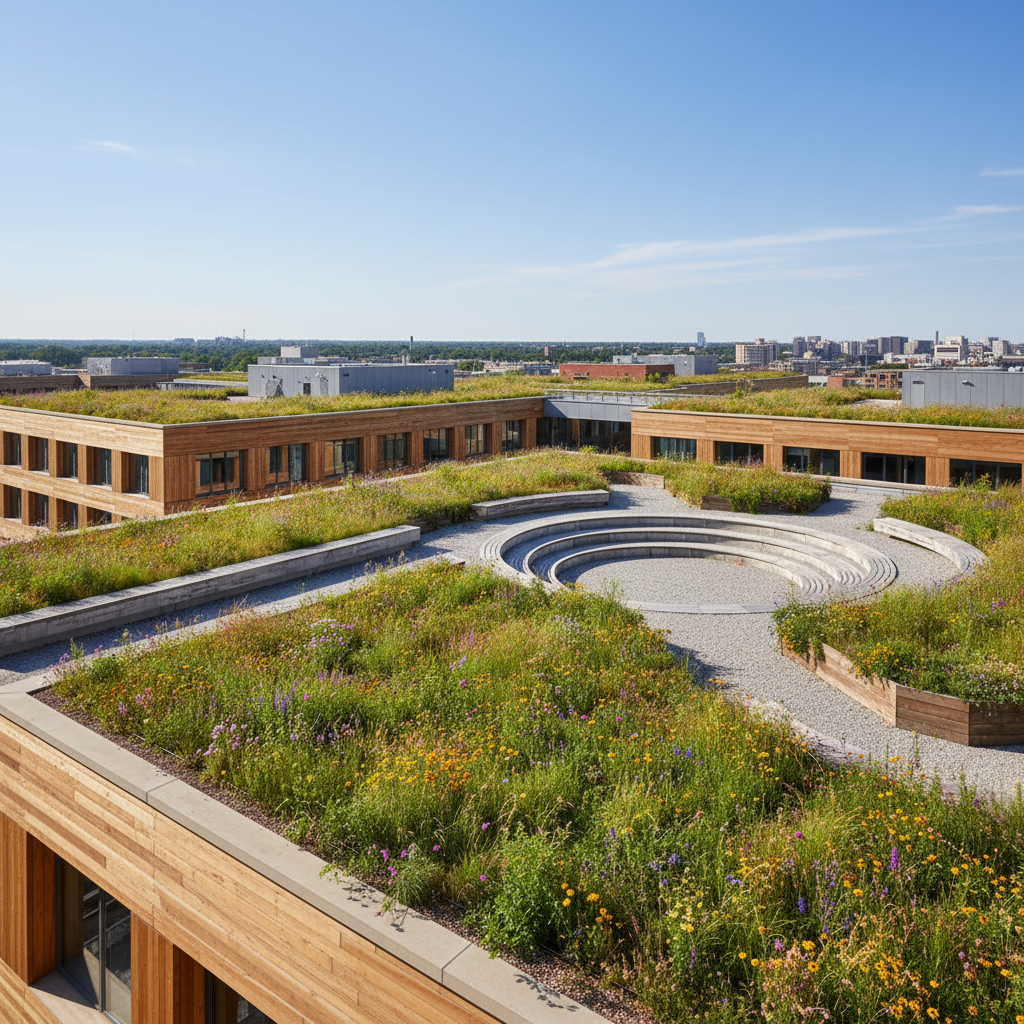
Rooftop campus with pollinator meadow plantings, gravel amphitheater and board-formed concrete seating across connected towers

02 / 03

Thornfield Rooftop Campus

ClientThornfield Capital — LEED BD+C Certification
Area38,000 sq ft
Year2024

A commercial developer's LEED-blocked permit resolved through a 38,000 sq ft rooftop campus across three connected towers. Pollinator meadows, a gravel amphitheater, and board-formed concrete seating walls. Earned 12 LEED credits, closing a six-month permit impasse.

Material Callouts

Board-formed concrete walls — 6" poured in place
Sedum + native meadow mix — 18,000 sq ft planted
Structural soil cells — 24" depth, 95% void space
Recycled steel edging — reclaimed industrial stock

"The rooftop campus was the only path to our certificate of occupancy. Terrain made it a landmark."

VP of Development, Thornfield Capital

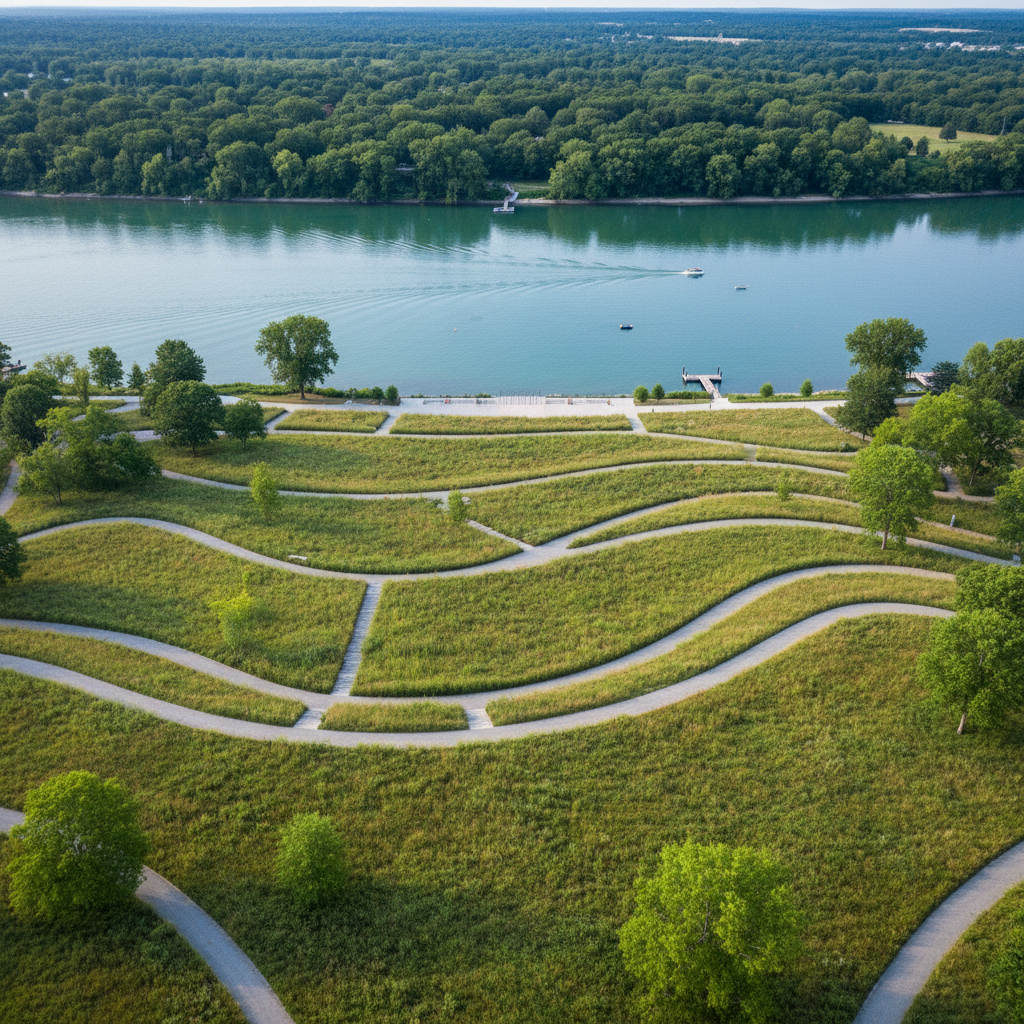
Sweeping aerial view of twelve-acre riverfront campus landscape with meadow terraces stepping toward river and pedestrian pathways

03 / 03

Confluence Riverfront

ClientUniversity of Minnesota, Facilities Management
Area12.4 acres
Year2025

A twelve-acre riverfront reclamation replacing fifty years of neglected quad infrastructure. Buried drainage remapped. New pedestrian spines connect six colleges. Meadow terraces step down to the Mississippi. This is what it looks like when a university stops maintaining a campus and starts building ground.

Material Callouts

Permeable concrete paving — 8" structural depth
Riparian meadow — 4.2 acres native restoration
Cast-in-place concrete retaining — 280 linear feet
Mississippi riprap — reclaimed limestone cobble

"For the first time in a generation, students are actually using the outdoor spaces between buildings."

Associate VP of Facilities, University of Minnesota

Who We Work With

Three clients.
One discipline.

Municipal

Planning Departments

Storm drains, highway medians, and neglected right-of-ways. We work directly with city bureaus to convert decommissioned infrastructure into civic green space — on budget, through permitting, with stormwater credits that matter to engineers.

14
Municipal projects delivered

Commercial

Developers & LEED

Green roofs and living walls that close permits. We understand BD+C certification timelines, structural loading constraints, and what it takes to earn 8–14 LEED credits on a single landscape intervention. We have never missed a certification deadline.

47
LEED credits delivered

University

Facilities Directors

Decades of deferred maintenance become a single transformative project. We handle buried utility conflicts, ADA circulation, and the political complexity of redesigning spaces that faculty and students have strong opinions about. We have done this on seven campuses.

7
Campus transformations
How We Work

Four phases.
No surprises.

Every Terrain engagement follows the same disciplined sequence. The process deck details deliverables, decision gates, and billing milestones for each phase.

Phase 01

Site Reconnaissance

Two-day on-site investigation. Soil borings, drainage mapping, utility conflicts, and photographic documentation of existing conditions at every scale from aerial to hand-level.

2–5 days

Phase 02

Schematic Design

Hand-drawn section studies and plan diagrams. Material palette established. Stormwater strategy confirmed with civil engineer. LEED credit pathway documented if applicable.

3–6 weeks

Phase 03

Construction Documents

Full permit-ready drawing set: grading plan, planting plan, irrigation, lighting, and all structural details. Coordinated with structural, MEP, and civil as required.

6–12 weeks

Phase 04

Construction Administration

Weekly site visits during construction. Material submittals reviewed within 48 hours. Punch list and substantial completion certification. One-year post-occupancy review.

Duration of build

Ready to begin

Start a
Site Visit.

Tell us where your site is, how large it is, and what is there now. We will respond within one business day with an availability window for a site reconnaissance.

Not ready for a site visit yet?

Download our Process Deck — a PDF detailing our phasing methodology, deliverable schedule, and billing structure. Sent instantly to your inbox.